

Why hospitality design is shaping the future of residential interiors
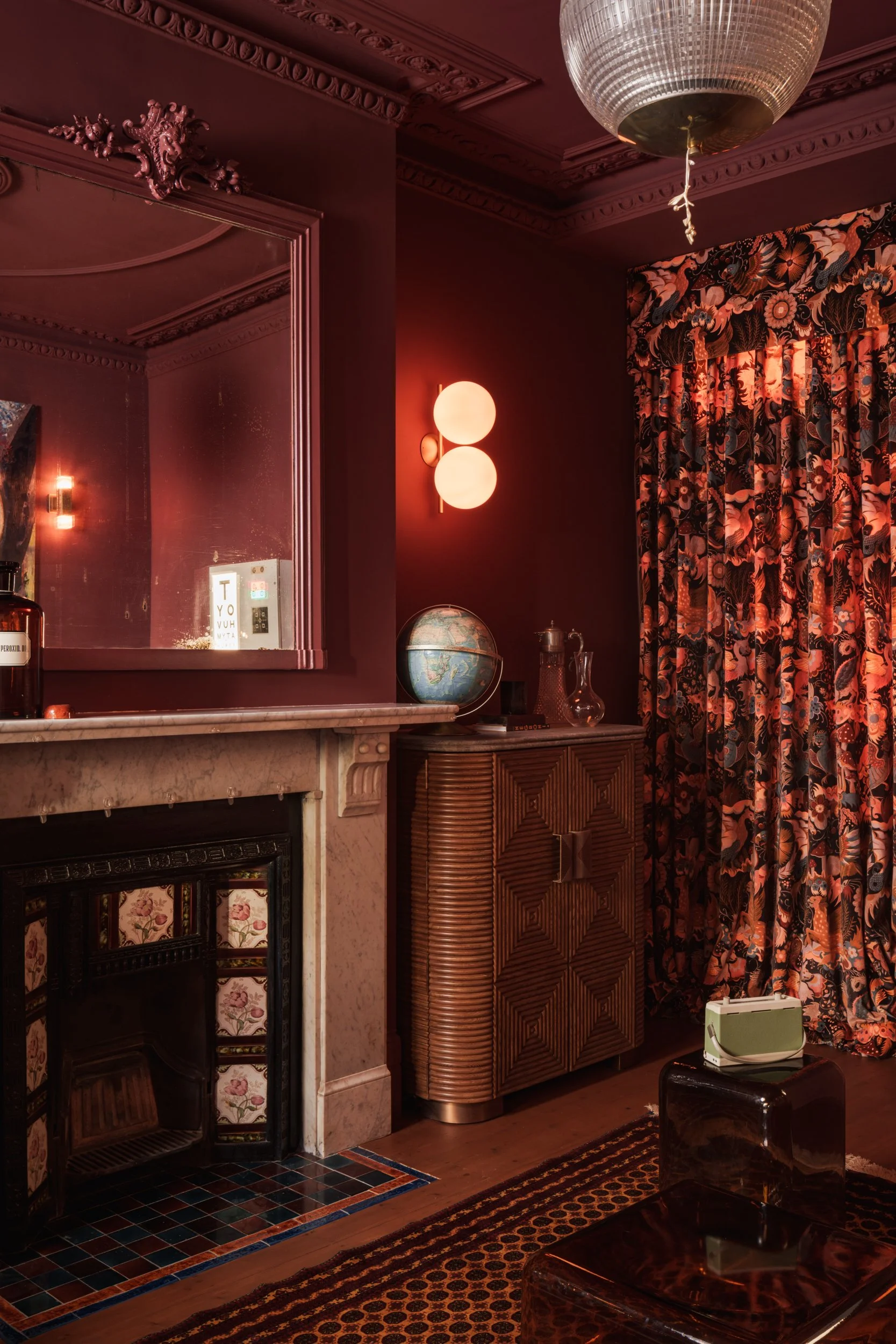
What was once a dead middle room became the emotional fulcrum of the house. Not the loudest space, but the most felt.
There’s a reason the most compelling homes today feel closer to boutique hotels or private members’ clubs than traditional residences.
In a recent project featured in Living Etc, we took a traditional Victorian terrace in London and reimagined it as a place that feels both expressive and restorative. A sanctuary for a family who travels widely and collects objects that matter to them.
What became clear as the project evolved was this: the atmosphere we were creating wasn’t purely residential. It had the emotional cues, rhythm and confidence of hospitality design.
That overlap is not accidental. It’s the direction our studio is now leaning into with intent.
What hotels and restaurants get right about how spaces feel
The best hotels and restaurants understand something fundamental: people don’t remember spaces, they remember how they felt inside them.
Great hospitality interiors don’t shout. They don’t over-explain themselves. They create a mood the moment you arrive and then quietly support you while you’re there.
You feel:
held, not overwhelmed
stimulated, but not restless
relaxed without feeling anonymous
That balance is hard to achieve and it’s exactly what many homes (and many commercial spaces) are missing.
From residential project to hospitality mindset
Although the London project was a private home, the design language drew heavily from hospitality principles:
Spaces that unfold rather than reveal everything at once
Lighting that shifts mood throughout the day
Materials chosen for patina and longevity, not perfection
Rooms designed for different states: arrival, retreat, conversation, pause
The result was a house that behaves more like a destination than a display. Guests instinctively slow down. Occupants move through it with ease. Nothing feels performative, yet everything feels considered.
This is the same thinking we now apply directly to hotels, restaurants, private members’ clubs and hospitality-led developments.
How hospitality spaces should feel - not just look
A well-designed hospitality interior should answer emotional questions before practical ones.
A hotel should feel:
calm but characterful
reassuring without being bland
confident enough to be memorable, not trendy
A restaurant should feel:
intentional from the threshold
immersive without distraction
designed for human behaviour, not Instagram
When design is led by feeling rather than fashion, spaces age better, photograph better over time, and create repeat visitors rather than one-off moments.
Why this matters commercially
Hospitality design isn’t decoration: it’s strategy.
Atmosphere affects:
dwell time
return visits
brand perception
how people talk about your space once they leave
Whether it’s a boutique hotel, destination restaurant or private members’ club, design becomes part of the guest experience and therefore part of the business model.
Our background in editorial, residential and now hospitality allows us to bridge storytelling with operational reality. We design spaces that feel intuitive, layered and commercially intelligent.
Residential and hospitality, designed with the same intent
Zoe Willis Design works across high-end residential and hospitality projects, bringing the same narrative-led approach to both.
For homeowners, that means spaces that feel like places you want to stay. For hospitality clients, it means environments that feel personal, grounded and emotionally memorable.
The line between home and hotel is becoming more fluid.
We design confidently on both sides of it..
Making “dead spaces” meaningful
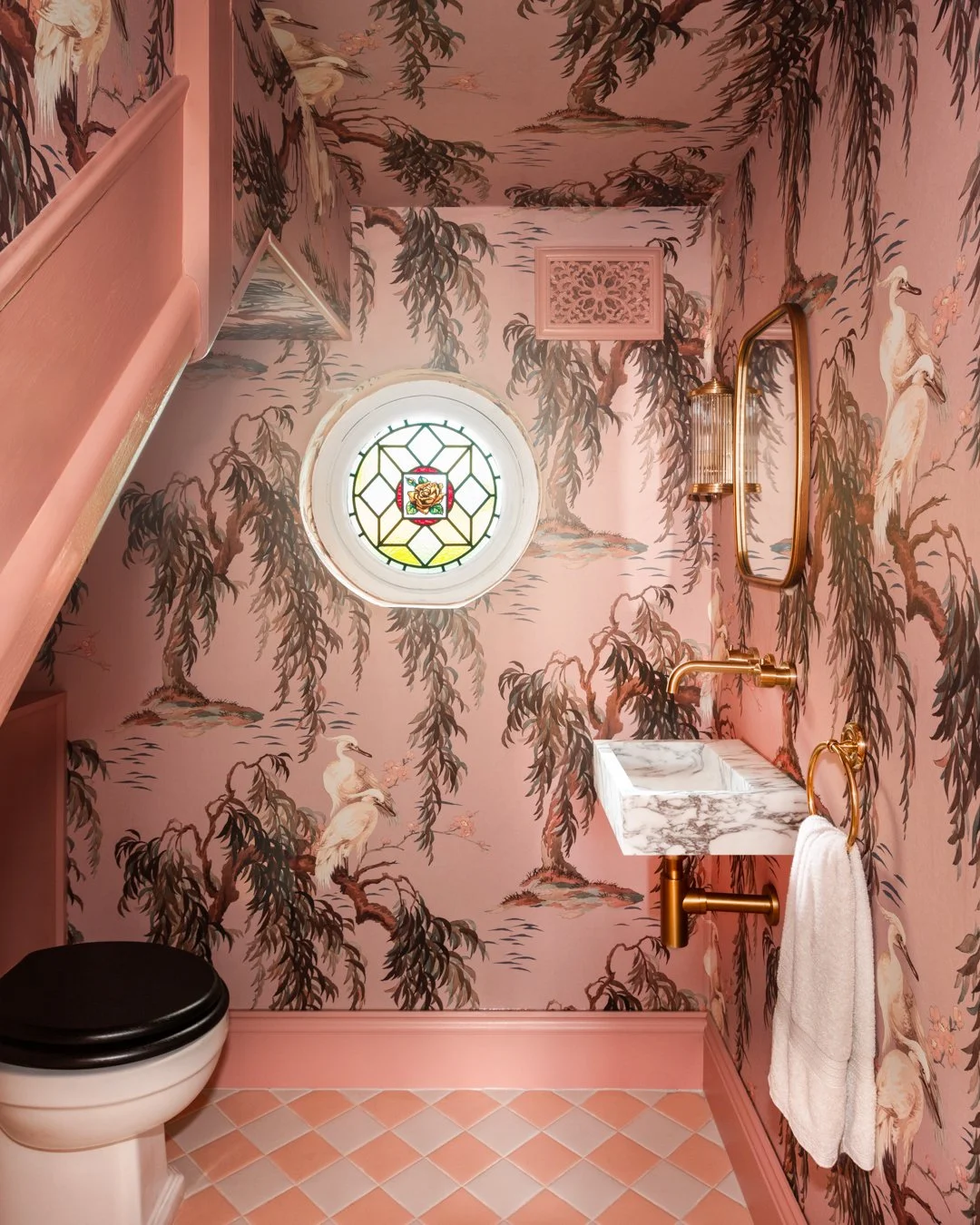
An unused understairs cupboard becomes a fun guest WC
Every home has them.
The in between rooms.
The awkward cupboards.
The spaces you walk past but never really use.
In period properties especially, these areas often get dismissed as structural leftovers rather than opportunities. But in my experience, it’s often these forgotten pockets that hold the most potential. When treated with intent, they can become the emotional heart of a home rather than its leftover edges.
Two recent projects are perfect examples of how so called dead space can be transformed into something deeply purposeful and quietly luxurious.
The Clapham Red Room: From pass through to pause point
Victorian houses are full of quirks. In this Clapham home, the middle room sat between the formal front reception and the kitchen beyond. It had no clear purpose, no strong light source, and functioned largely as a corridor you passed through on your way elsewhere.
Rather than fight that, we leaned into it.
Instead of trying to make it something it wasn’t, we reframed it as a snug. A place to retreat, decompress, read, pour a drink. A room designed for atmosphere rather than activity.
We cocooned the space with deep red tones and cinematic velvet drapes that soften sound and light. A generous, squishy Arflex sofa anchors the room and invites you to sink in rather than perch. Moody layered lighting creates pockets of glow rather than blanket brightness, encouraging slower moments and quieter use.
A discreet bar was introduced not as a showpiece, but as a ritual. This is a room for an evening drink, a book, a record playing softly in the background.
What was once a dead middle room became the emotional fulcrum of the house. Not the loudest space, but the most felt.
The Surrey secret WC: Elevating the overlooked
Understairs cupboards are often the most ignored spaces in a home. In this Surrey project, the area already housed a basic toilet, but it was treated purely as a functional afterthought.
We saw an opportunity to do the opposite.
Instead of minimising the space, we heightened it. Rich finishes, tactile surfaces, considered lighting and a sense of theatre transformed what could have remained a purely practical WC into something indulgent and memorable.
This is now a room that surprises guests. A space with intention, confidence and presence. Proof that even the smallest square footage can deliver impact when it’s designed with care.
Why these spaces matter
Dead spaces aren’t really dead. They’re simply undefined.
When every room in a house is expected to perform loudly or justify itself through size or utility, we miss the quieter opportunities. The spaces that support how we actually live rather than how we think a home should function.
These in between areas are where atmosphere thrives. They’re where you can be bolder, moodier, more personal. They allow the main rooms to breathe while offering moments of retreat and surprise.
Designing them well isn’t about adding more. It’s about paying attention.
If you’re renovating or rethinking your home, look again at the spaces you’ve written off. The hallway that could slow you down. The cupboard that could delight. The room you pass through that could finally invite you to stay.
Those are often where the magic lives.
The New Luxury Is Personality
Why individuality, confidence and emotional resonance are now the true markers of luxury and why homes designed with personality age better than those built around resale neutrality
Why individuality, confidence and emotional resonance are now the true markers of luxury and why homes designed with personality age better than those built around resale neutrality
Luxury used to be easy to define. Pale palettes. Perfect symmetry. Expensive finishes applied so discreetly they almost disappeared. Homes designed to offend no one and appeal to everyone.
For years we were told that neutrality was sensible. That personality was risky. That if you wanted to protect resale value you needed to play it safe.
But that idea feels increasingly outdated.
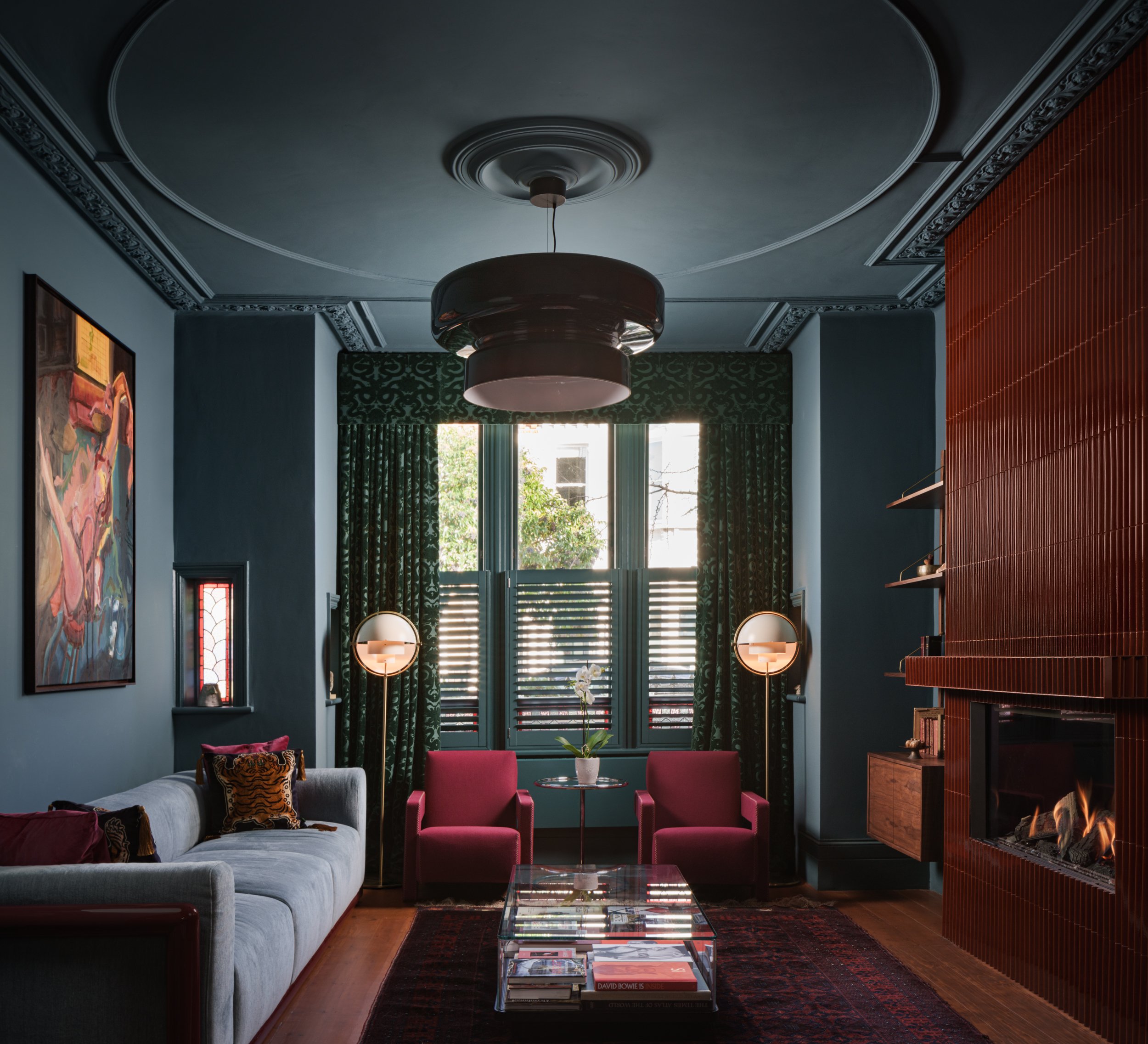
The most compelling homes today are not neutral. They are confident. They are layered. They feel personal, lived in and emotionally intelligent. They stop you mid scroll not because they are flawless, but because they feel real.
The new luxury is not about restraint for the sake of it.
It is about expression, intention and confidence.
For a long time homes were treated primarily as assets. Design decisions were made with an imaginary future buyer in mind rather than the person actually living there. Walls stayed white. Kitchens stayed safe. Colour was softened or removed altogether in case it frightened someone off.
The result was a generation of houses that looked competent but felt oddly hollow.
What I see now, particularly with confident homeowners, creatives and people who have lived a little, is a shift away from that thinking. People no longer want their homes to behave like show homes or investment vehicles. They want them to reflect who they are, how they live and what matters to them.
This is not about being reckless. It is about being clear.
Luxury has moved away from generic polish and towards identity. Not in a shouty way. In a considered, deliberate way.
True luxury has always been about feeling rather than finish. Somewhere along the way we confused expense with emotion. Marble without meaning. Minimalism without warmth. Spaces that photograph beautifully but do very little for the people living inside them.
The homes that resonate now are emotionally legible. You understand the mood almost immediately. Calm. Cinematic. Cocooning. Playful. Dramatic. They make you feel something.
That does not come from following trends. It comes from storytelling.
A colour chosen because it reminds someone of travel, art or memory.
A layout that reflects how a family actually gathers rather than how a room is supposed to be used.
Materials chosen for how they wear and age rather than how pristine they look on day one.
These homes are not chasing perfection. They are chasing connection.
And connection has become the real status symbol.
There is a persistent myth that bold or personal homes date faster. In my experience the opposite is usually true.
Trend led neutrality is one of the quickest things to age.
The safe palettes of the last decade already feel tired, not because they were wrong, but because they were everywhere. They belonged to a very specific moment.
Homes designed around personality sit outside those cycles. When a space is rooted in the owner’s identity rather than an algorithm, it does not rely on fashion to stay relevant. It has its own internal logic.
Look at the interiors that endure, the ones repeatedly celebrated in publications like The World of Interiors. They are rarely neutral. They are layered, idiosyncratic and confident. They evolve, but they do not unravel.
Because they were never trying to please everyone.
The common thread running through homes that age well is confidence. Not bravado. Not excess. Just a quiet assurance in decision making.
Colour chosen with intention.
Furniture bought for proportion and longevity rather than trend relevance.
Spaces allowed to breathe, to patinate, to collect stories over time.
This confidence often appears when people let go of resale anxiety. Interestingly, homes with a clear point of view are often more desirable, not less. Buyers respond to coherence. To clarity. To the feeling that a home knows exactly what it is.
A strong identity is far more compelling than a blank slate.
Designing a home around resale is, at its core, designing for departure.
Designing with personality is an act of commitment. It says I plan to live here. I plan to feel something here.
That does not mean ignoring practicality or value. It means redefining them.
Value is not only what a property sells for.
It is how it supports your life while you are living in it.
Does it energise you.
Does it calm you.
Does it reflect you.
Homes designed with emotional intelligence tend to work harder for their owners. Psychologically, creatively, socially. They become places people want to spend time in. Places people remember. Places that gather stories.
That is why they endure.
Luxury today is not about playing it safe.
It is about being specific.
In a world of endless inspiration and visual sameness, individuality has become rare and therefore valuable. Homes that express a clear identity stand out precisely because they are not trying to blend in.
The new luxury is personality.
Not as decoration, but as direction.
Because the most timeless homes are not the ones that avoid risk. They are the ones that know who they are.